SANDSTONE
What is Sandstone?
Sandstone is an arenaceous sedimentary rock composed mainly of feldspar and quartz and varies in colour (in a similar way to sand), through grey, yellow, red, and white. Since sandstones often form highly visible cliffs and other rock formations, certain colors of sandstone may be strongly identified with certain regions. For instance, much of the American West is well-known for its red sandstones.
Sandstone is an arenaceous sedimentary rock composed mainly of feldspar and quartz and varies in colour (in a similar way to sand), through grey, yellow, red, and white. Since sandstones often form highly visible cliffs and other rock formations, certain colors of sandstone may be strongly identified with certain regions. For instance, much of the American West is well-known for its red sandstones.
Sandstones are often relatively soft and easy to work which therefore make them a common building and paving material.
Rock formations that are primarily sandstone usually allow percolation of water, and are porous enough to store large quantities, making them valuable aquifers. Fine grained aquifers, such as sandstones, are more apt to filter out pollutants from the surface than are rocks with cracks and crevices such as limestones or other rocks fractured from seismic activity.
Origins of Sandstone
Sandstones are clastic in origin (as opposed to organic, like chalk or coal). They are formed from the cemented grains that may be fragments of a pre-existing rock, or else just mono-minerallic crystals. The cements binding these grains together are typically calcite, clays and silica. Grain sizes in sands are in the range of 0.1mm to 2mm. (Rocks with smaller grainsizes include siltstones and shales and are typically called argillaceous sediments, as are also clays. Rocks with larger grainsizes include both breccias and conglomerates and are termed rudaceous sediments.).
The principle mechanism for the formation of sandstone is by the sedimentation of grains out of a fluid, such as a river, lake or sea. The environment of deposition is crucial in determining the characteristics of the resulting sandstone, which on a finer scale include its grainsize, sorting, composition and on a larger scale include the rock geometry. Principal environments of deposition may be split between terrestrial and marine, as illustrated by the following broad groupings:
Terrestrial environments
1. Rivers (levees, point bars, channel sands)
2. Lakes
Marine environments
1. Shoreface sands
2. Deltas
3. Turbidites (submarine channels)
Standard sizes are:
Tiles:
Sizes Thickness
300x300mm, 300x200mm, 400x200mm,
400x400mm, 300x600mm, 600x600mm in 10-14 mm
| 300X300 TO BE CONSIDERED AS 1′ X 1′ |
| NATURAL TILES WILL BE IN A THICKNESS OF 10-14MM. |
| GAUGED TILES WILL BE IN A THICKNESS OF 10MM +/-1MM. |
| NATURAL TILES TO BE PACKED IN EXPORT IN WORTHY WOODEN CRATES. |
| GAUGED TILES TO BE PACKED IN CORRUGATED BOXES & THAN INTO WODDEN PALLETS. |
Slabs:
Random sizes available in 20mm & 30mm thickness.
| PRICES FOR RANDOM ARE ON A CRATE BASIS. |
Parameters definition:
Polished – generally gloss levels should be 0-15 as measured by a gloss meter. To achieve this, final polishing should have been done by italian machines.
Honed: To grind a surface with a high grit material to a uniform specification without producing a reflective surface
Calibration: To grind a surface with a high grit material to a uniform surface to maintain the thickness variation.
Gangsaw: To grind two sides of the stone surfaces with a high grit material to a uniform specification without producing a reflective surface.
Shade variation – Slabs / tiles should be sorted to ensure uniformity of shade. Normally, any colour can be sorted into three shades. Sorting is simple -just lay all the material on the floor and look from different directions.
Colour patches – These are darker or lighter patches or bands of single colours due to mineral localisation.
Free lengths: i.e. lengths varying randomly while width is constant are also very attractive. Choose the widths as per the expected floor area. Buy random lengths and cut at your site to fit.
Flatness Tolerances
A 4’ dimension in any direction on the surface shall determine variation from true plane, or flat surfaces. Such variations on polish, hone, and fine rubbed surfaces shall not exceed tolerances listed below or 1/3 of the specified joint width, whichever is greater. On surfaces having other finishes, the maximum variation from true plane shall not exceed the tolerance listed below or + 3 mm of the specified joint width, whichever is greater.
Polished, honed or fine rubbed finishes… +/- 1 mm
Sawn, Calibrated, 4-cut and 6-cut…. +/- 1 mm
Split face, pointed or other rough cut finishes… +/- 1 mm
Edges also can be chamfered / bevelled. Chamfering removes whiteness and chipped edges. This looks very good. Chamfering is a simple process in which a polishing brick is run at an angle of 45 °.
DIAGONAL OUT
DIAGONAL OUT MUST NOT BE MORE THAN 1MM FOR TILES. IN SLABS IT VARIES.
Quality Parameters:
One side natural and one side honed
a. One side honed.
b. Other side natural.
c. Thickness variation is +/- 1 mm
One side natural and one side calibrated
a. One side Calibrated.
b. Other side natural.
c. Thickness variation is +/- 1 mm
One side calibrated and one side honed
a. Honed finished one side.
b. Other side calibrated.
c. Thickness variation is +/- 1mm
One side Calibrated and one side mirror polished
a. One Side Fine Mirror Polished.
b. Calibration / Honed on the other side.
c. Thickness variation is +/- 1mm.
One side Calibrated and one side fine mirror polished( with max. gloss)
a. One Side Fine Mirror Polished.
b. Calibration / Honed on the other side.
c. Thickness variation is +/- 1 mm including all corner of the stone.
Note: The above Thickness variation mentioned is for the container at total. The variation in tile is not acceptable.
LIST OF PRODUCTS AVAILABLE & PHOTO GALLERY
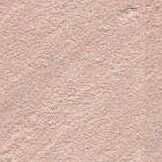
DHOLPUR BEIGE
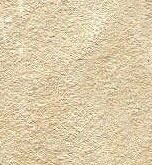
TINT MINT
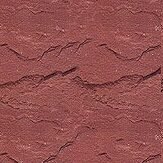
MORNING GLORY
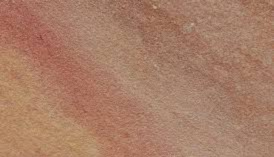
RADIENT RED
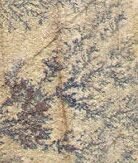
FOSSIL
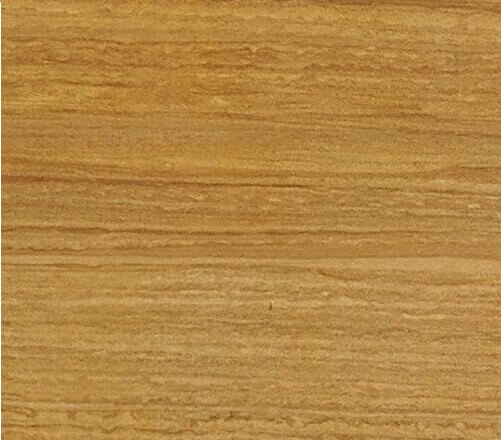
TEAKWOOD
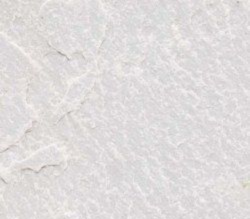
DHOLPUR WHITE
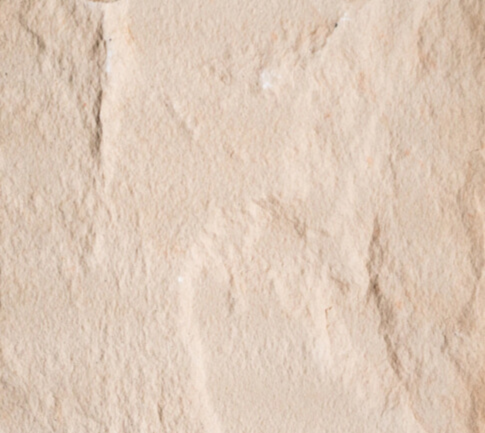
PEACH BLOSSOM
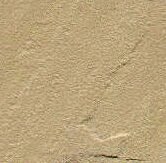
LALITPUR YELLOW
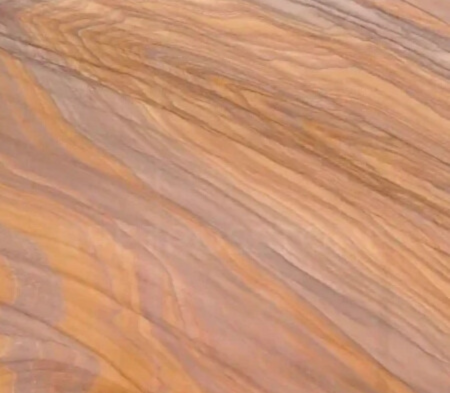
RAINBOW